
Practical Tips for Teaching Mental Maths
Teaching Mental Maths not only helps students with their arithmetic skills but also enhances their overall cognitive abilities. Mental arithmetic is crucial for everyday tasks, improving problem-solving skills, and fostering confidence in mathematics. In this blog post, we will explore practical tips for effectively teaching mental arithmetic that can be applied both at home and in the classroom.
Understanding Mental Maths
Mental Maths refers to performing arithmetic operations without the aid of pencil and paper, calculators, or computers. This practice encourages flexibility in thinking and enables individuals to manipulate numbers with ease. To cultivate a stronger foundation in mental mathematics, it's essential to develop strategies that suit each learner's needs and learning pace.
Incorporating a variety of methods can help students engage more deeply with the material. For example, using visual aids or hands-on activities can make learning more enjoyable. Also, promoting a positive attitude toward Maths can significantly affect students' willingness to practice and improve.
Building a Strong Foundation with Basic Concepts
Before delving into more complex Mental maths techniques, it is vital to ensure that students have a robust understanding of basic concepts. This foundation includes addition, subtraction, multiplication, and division.
Reinforcing Basic Operations
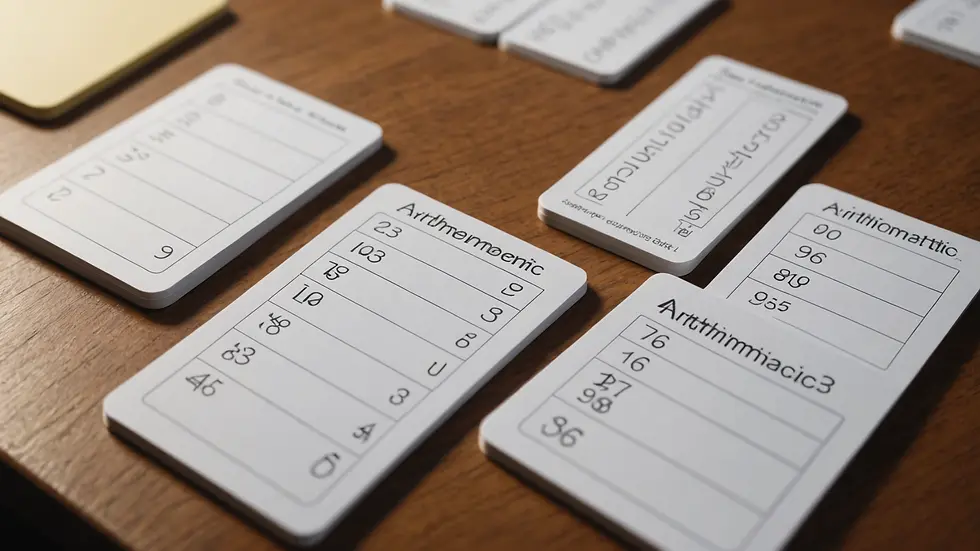
One effective approach is to use games that reinforce these basic operations. For example, while playing bingo, teachers can call out problems like 7 + 3 or 9 - 4, and students must find the correct answer on their cards. This method reinforces skills in an engaging way. Additionally, flashcards can be used to reinforce basic arithmetic facts. Students can practice with one another in pairs or small groups.
Incorporating Number Talks
Implementing number talks is another excellent way to reinforce Mental maths. These discussions encourage students to share their thought processes when solving problems. Teachers can present a problem, such as 32 plus 19, and ask students to explain their strategies. This encourages deeper understanding and the exchange of different methods.
What are examples of Mental Maths?
There are many effective Mental Maths techniques that can be utilized in teaching, each adapted to different learning styles. Here are some popular strategies:
Partitioning Numbers
Partitioning is dividing numbers into smaller, more manageable parts. For example, if a student needs to add 47 and 36, they can break the numbers down:
40 + 30 = 70
7 + 6 = 13
Then, 70 + 13 = 83
This technique simplifies arithmetic by making it easier to process.
The Doubling and Halving Method
This strategy involves adjusting the numbers to simplify calculations. For instance, with the equation 16 multiplied by 25, a student can halve 16 to get 8 and double 25 to get 50. Thus, they are solving 8 times 50, which is much easier to calculate as 400.
Making Use of Benchmarks
Using benchmarks can also enhance Mental Maths skills. For example, when adding numbers like 198 and 47, students can round 198 up to 200 for easier mental addition. By adjusting the final answer later, they discover that 198 + 47 is 245 because they initially calculated 200 + 47.

Engaging Activities to Reinforce Learning
Engaging students with fun, interactive activities can solidify their understanding of mental arithmetic.
Maths Relay Races
Organize a Maths relay race where students solve problems in teams. Set up stations with different maths challenges, and as students complete a problem, they run back to tag their teammate. This fosters teamwork and makes practice dynamic.
Maths Apps and Online Games
Incorporate technology as a teaching tool. Many educational apps and online games are specifically designed to enhance Mental Maths skills. These platforms provide instant feedback, allowing students to track their progress and enjoy learning.
Story Problems
Create story problems that utilize Mental Maths. Relating maths to real-life scenarios can make learning relevant and engaging. You can introduce a situation, such as shopping for fruits or planning a party, where students must use addition, subtraction, and multiplication to solve problems.
Creating a Supportive Learning Environment
Establishing a nurturing environment is crucial in teaching mental arithmetic. Make sure to recognize and celebrate small achievements. This positive reinforcement encourages students to take risks and practice more.
Fostering a Growth Mindset
Encouraging a growth mindset among students is essential. Make it clear that making mistakes is part of the learning process. Share stories of famous mathematicians who struggled but succeeded. This narrative allows students to perceive challenges in a more favorable light and empowers them to persevere.
Encouraging Collaboration
Promote collaborative learning by allowing students to work in pairs or small groups. Students can learn from each other and provide alternative problem-solving strategies. Group activities also encourage communication and social skills.

Integrating Mental Maths Strategies into Everyday Life
Lastly, integrating Mental Maths into daily life can significantly benefit learners. Encourage them to practice simple mental calculations during everyday activities, such as grocery shopping or budgeting.
Daily Challenges
You could assign daily Mental maths challenges where students calculate total expenses, discounts, or sales tax while shopping. Practicing maths in practical scenarios helps reinforce concepts instinctively.
Family Involvement
Encourage families to participate in Mental maths exercises through fun games. Family game nights featuring board games that involve maths, such as Monopoly, can seamlessly integrate fun with learning. This involvement not only supports student learning but also cultivates an enriching environment outside of the classroom. Also Read our Blogs on: The Importance of Mental Arithmetic Training Does My Child Really Need Abacus Classes? 7 Questions Parents Should Ask 5 Ways Abacus Learning Boosts Your Child's Confidence and Academic Performance
In summary, effective teaching of mental arithmetic encompasses various strategies, engaging activities, and a positive learning environment. By building a strong foundation, applying mental maths in real-life situations, and employing diverse techniques, educators can foster a love for maths that benefits students for years to come. The use of Mental Maths strategies can further enhance maths proficiency and confidence in young learners.


Comments